

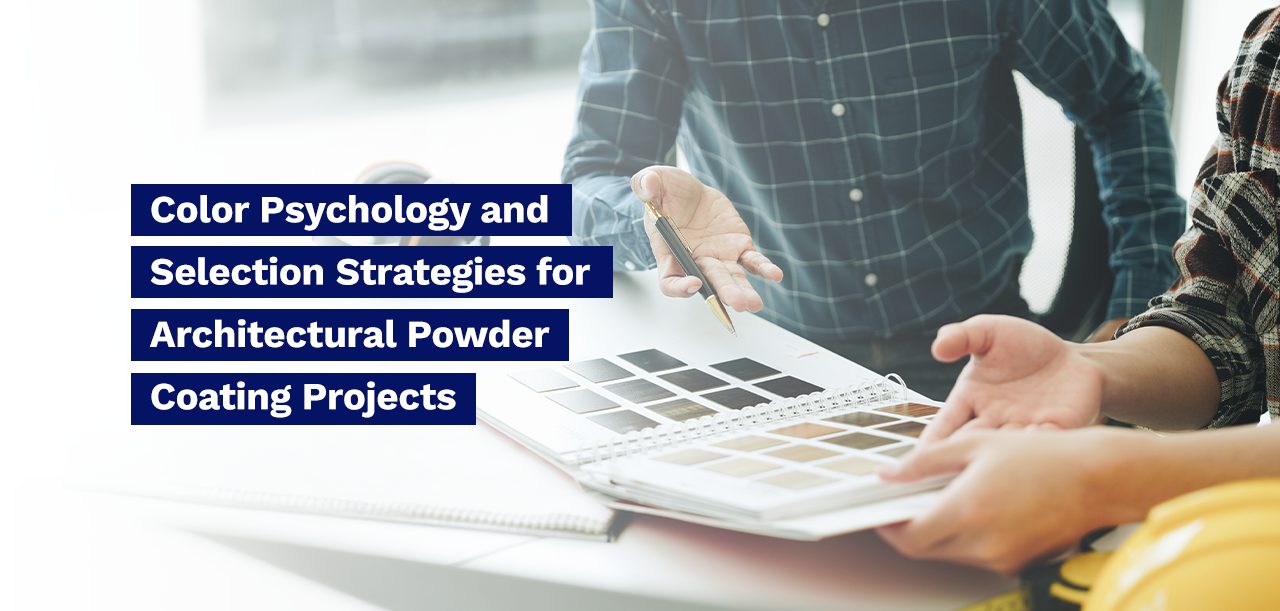
There is more to color than just decoration. The concept of color significantly influences how people perceive a place, and the colors you choose for a project also impact a building’s long-lasting visual appeal. About 80% of the sensations we experience are visual, which makes color choice an essential part of the design process.
Discover the psychology behind color and why your choices make a difference.
Key Considerations for Powder Coating Color Selection
A considerable challenge with choosing powder coating color schemes is deciding how colors will appear in various locations and lighting conditions. For example, selecting a powder coating color that you believe looks great in one place may look vastly different in another. Below are essential considerations to assess when building color schemes.
Work With the Lighting
Natural light changes throughout the day, altering how colors appear both indoors and outdoors. For interior jobs, artificial lighting comes with its own set of rules. Working on a project involving fluorescent or light-emitting diode (LED) lighting may influence how surfaces with powder coating look. As a best practice, examine how color samples will appear in the project environment, preferably at various times of day, to compare lighting differences.
Consider Your Project Location
The environment around a project location plays a key role in the powder coating colors you choose. Locations with higher temperatures and regular bright sunshine will likely suit vibrant palettes. Colder locations, however, are well-suited for more subtle tones. If you are working on a project in desert-like conditions, harsh sunlight can intensify darker colors and wash out lighter tones.
Coastal projects also come with additional issues, including humidity and salt air that can affect the durability of powder coating and color tone. The cultural landscape is a crucial factor. Your choice of color can impact how a person feels in a space, influenced by cultural beliefs and associations.
Color Durability and Resistance Factors
Due to weather conditions, the location of a project can make powder coating for exterior jobs particularly challenging. Using proper installation and maintenance techniques, interior powder coating jobs may last up to 40 years. However, exterior projects are less durable, with an expectancy between 15 and 25 years.
The biggest threat to powder coating durability is UV exposure. The type of powder coating you choose also makes a significant impact. Ultraviolet exposure may lead to color fading, so an epoxy coating is best for interior applications.
A polyester coating is suitable for both indoor and outdoor applications because it has some weather resistance capabilities.
A notable option for exterior projects is fluoropolymer powder coatings. Using this powder coating type helps maintain color even under difficult weather conditions.
Architectural Color Psychology for Different Types of Buildings
A building’s purpose is crucial for selecting the best colors. Psychological responses vary based on the environment. Below are some points to focus on for your project:

Residential vs. Commercial Color Considerations
Projects for residential spaces will likely focus on comfort. Therefore, color palettes deliver a welcoming tone in comparison to standard office spaces. For commercial buildings, color choices may be more specific to blend with a particular brand. Colors may be bolder and more vibrant to match the brand identity. The color palette you work with can influence the behavioral and cognitive responses of residents and visitors.
Color Psychology for Institutional Spaces
Other building types, such as healthcare facilities, maintain color schemes that influence behavioral and cognitive responses. Schools and other educational institutes tend to favor blue and green tones because they promote focus and calm in classrooms. For civic and government buildings, these spaces may use more neutral tones.
Navigation and Safety Components
Especially for commercial and institutional buildings, navigation and safety are essential elements to consider. The colors you choose help people explore within a space. A well-thought-out plan that considers colors is particularly beneficial for challenging environments where people may be visiting for the first time.
High-contrast colors work well for emergency exits. Even in low-light conditions, these colors remain visible. To ensure compliance with current standards, there must be a contrast ratio of at least 65% between the background and the light reflective value of the sign text. Maintaining this ratio helps people with poor vision to find their route around a building.
How to Choose Building Color Schemes
Finding suitable powder coating building color schemes requires an understanding of how colors work together to create an impact. First, consider the following types of color schemes:
- Analogous tones: For spaces to achieve a natural and warm feel, select colors that are next to one another.
- Monochromatic colors: To achieve a cohesive look, select variations of a single color. Add black to create shades and white for tints.
- Complementary tones: Dynamic color schemes use complementary contrasts, such as selecting two opposite colors on the color wheel.
- Triadic shades: Choose three colors equally spaced apart on the color wheel.
- Tetradic colors: This approach includes two complementary pairs, creating a rectangle or square on the color wheel.
You can use the 60-30-10 rule when choosing a color scheme:
- Dominant color: 60%.
- Secondary color: 30%.
- Accent color: 10%.
When deciding on colors, consider the materials and furniture within a space. Assess how the powder coating surfaces will appear next to concrete or wooden materials.
Powder Coating and Architectural Finish Psychology
Different finishes affect both the appearance of a project and psychology:
- Gloss: Beneficial for highlighting specific areas, as gloss finishes reflect more light. Generally, gloss enhances the perception of quality.
- Textured: The texture of the powder coating you choose affects the final appearance. Rougher textures impart the perception of discomfort, and smooth textures offer a sense of comfort.
- Matte: Ideal for hiding imperfections, but may tone down the color of the powder coating. Matte finishes convey a sense of authenticity and tradition.
- High gloss: Unlike matte, high gloss can accentuate imperfections, but offers a smooth surface and optimum light reflection. Glossy surfaces appear modern and innovative.

Discover the Perfect Powder Coating Color Scheme With Keystone Koating
Developing an understanding of the psychology behind colors and how they appear in various locations is essential for creating productive spaces. Keystone Koating combines 30 years of expertise with a clear communication process, from start to finish, encompassing preparation and application.
Our team can offer advice, including the right powder coating types to explore and guidance on exterior color planning. Every project is unique, and we know the importance of building custom color schemes that bring your vision to life.
Are you ready to get started? Request a quote from our team today.